

If you’ve ever stood by a construction site, a beach restoration project, or a riverbank where sand is being extracted to build roads, concrete, or even refill eroded coastlines, you’ve likely seen a sand suction dredger at work. For those of us who supply these critical pieces of heavy equipment—we’re often asked one question more than any other: What’s the real maintenance cost of a sand suction dredger? It’s not a number you can pull from a spec sheet, and it’s not a one-size-fits-all figure. As someone who’s worked with dredge operators, project managers, and small-scale mining teams for over a decade, I’ve seen first-hand how poorly planned maintenance can sink a project’s budget faster than a clogged suction pipe. Let’s break this down, because understanding these costs isn’t just about fixing parts—it’s about keeping your dredger working when you need it most.
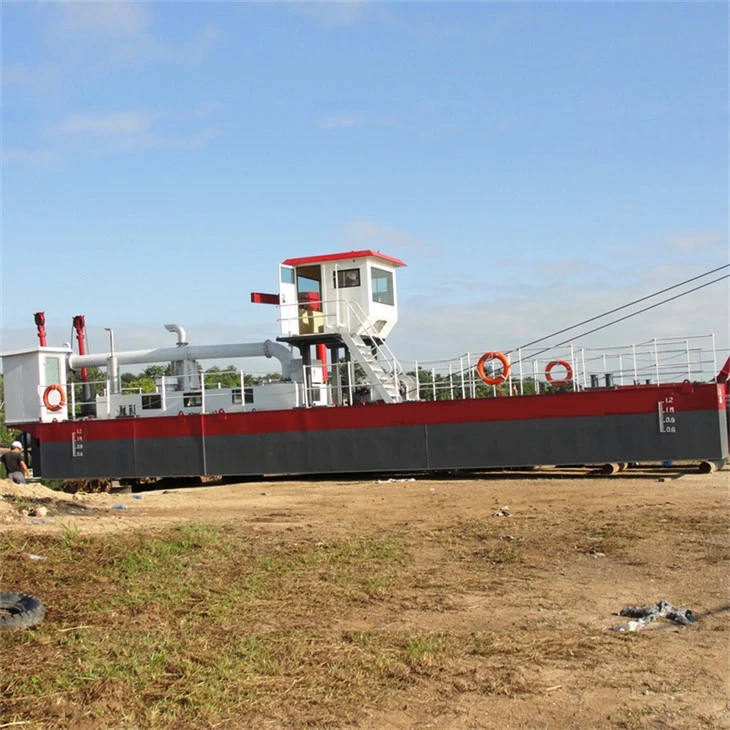
First, let’s ground ourselves in what a sand suction dredger actually does, because the maintenance needs tie directly to how it operates. A sand suction dredger uses high-powered pumps, hoses, and often jet water systems to suck sand and sediment from riverbeds, seabeds, or ponds, then transports it to a processing area. There are different types too, and each has its own maintenance profile. For example, a jet sand mining boat dredger uses high-pressure water jets to loosen compacted sand before suction, which puts different strain on parts than a simpler gravity-fed model. A standard sand suction dredger, which relies more on pump power to pull loose sand, will have different wear points than a jet sand suction dredger designed for harder, denser sediment. Even a pond silt cleaning jet suction dredger, which works in shallow, often quieter water, has unique maintenance needs tied to preventing algae or debris buildup in its intake. All these variations mean maintenance costs shift, but there are core costs every operator should plan for.
Let’s start with the biggest line item: wear and tear on the most stressed parts. For any sand dredger, the pump, suction pipe, and cutterhead (if it has one) take the brunt of the sand’s abrasiveness. Sand is essentially tiny, sharp particles, and when they’re moving at high speed through metal pipes or a pump impeller, they act like sandpaper, wearing away at surfaces over time. In our experience supplying dredgers, a typical operator will spend between 10-15% of the dredger’s initial purchase price annually on replacing these wear parts. Wait, let’s make that concrete—if a standard sand suction dredger costs around $200,000 (a mid-sized model for river or coastal work), that’s $20,000 to $30,000 a year on parts. For a larger, high-production dredger used in seabed mining, that jumps to 18-22% because it’s running longer hours in more abrasive sediment. The jet systems, like those on a jet suction sand dredger, add another layer: the jet nozzles can clog with debris or erode from the high-pressure water, so operators spend extra on replacing those every 3-6 months, depending on how often they use the dredger. We’ve seen operators cut corners here by using cheaper nozzles, but that often leads to more clogs, which mean the dredger has to shut down mid-job—costing more in lost production than they saved on parts.
Next, there’s routine preventive maintenance, which is the stuff operators often put off until it’s too late. This includes oil changes for the engine and pump, checking hydraulic lines (critical for moving the dredger’s arms and suction head), inspecting electrical systems, and cleaning the intake filters. We recommend doing these checks every 50 operating hours for small dredgers, and every 100 hours for large, high-production models. The cost here isn’t just parts—it’s labor. Most dredge operators don’t have in-house mechanics, so they’re paying for skilled technicians to come out on-site, sometimes in remote locations where it’s hard to get equipment. For a small to mid-sized dredger, that’s about $5,000 to $8,000 a year for routine checks and parts. For a larger model working offshore, that labor cost can double because technicians have to travel to the site, which adds time and expense. One project I worked on a few years back skimped on this: they skipped a hydraulic line check, a line burst mid-operation, flooding the engine room and costing $40,000 in repairs plus two weeks of lost work. That’s the kind of expense that makes preventive maintenance look like a bargain.

Then there are unplanned or emergency repairs, which are the wildcard in any maintenance budget. No matter how good your care, parts break, systems fail, or unexpected issues pop up. What falls into this category? A broken pump impeller from a stray rock sucked into the intake, a clogged jet line that damages the pump, or an engine failure from running it too hard without proper cooling. We’ve found that emergency repairs usually add up to 5-10% of the dredger’s initial purchase price annually. For small operators with a single dredger, that number might be higher if they don’t have access to spare parts or a reliable mechanic. For larger companies with a fleet, they can keep emergency costs lower by keeping a stock of common parts on hand. That said, even well-prepared teams hit unexpected costs. Last year, a customer of ours running a jet sand mining boat dredger hit a sunken tree stump while dredging in a river. The stump tore a hole in the suction pipe and bent the cutterhead, costing $12,000 in parts and $6,000 in labor to fix, plus three days of lost production. That’s why we always recommend setting aside a buffer—at least 10% of your total maintenance budget—for these unforeseen hits.
Wait, let’s not forget about seasonal or site-specific factors that change maintenance costs. If you’re working in saltwater (like a seabed dredger), salt corrosion is a huge issue that operators in freshwater never have to deal with. Salt eats away at metal parts, especially the pump casing, bolts, and electrical connections. That means more frequent cleaning of the dredger after each use, and more frequent replacement of corroded parts. Operators in saltwater often spend an extra 5-7% annually on corrosion-related repairs compared to those working in rivers or freshwater ponds. On the flip side, if you’re working in a pond where the water is calm and sediment is finer, a pond silt cleaning jet suction dredger will have lower wear on pump parts, because the silt is less abrasive than coarse sand. That’s a big difference—we recently had two customers with similar-sized dredgers, one working in a river with coarse sand, one in a pond with silt. The river operator spent $28,000 a year on maintenance, the pond operator spent $12,000. That’s not a small gap, and it’s all tied to where you’re working.
Another often-overlooked cost is the cost of downtime. When your dredger is down for repairs, you’re not making money—you’re paying for crew, equipment rentals to cover the work, and missing project deadlines, which can lead to penalties. For a dredger that’s expected to run 200 days a year (a common number for commercial projects), each day of downtime costs an average of $1,500 to $3,000, depending on the project’s output. That means a week-long repair isn’t just the cost of parts and labor—it’s $10,500 to $21,000 in lost revenue. We always tell customers that investing a little more in preventive maintenance now saves them from way higher downtime costs later. A customer who recently upgraded to a newer model sand suction dredger told us that before, they were spending 20% of their revenue on emergency repairs. Now, with a scheduled maintenance plan, that’s dropped to 8%, and they’re able to take on more projects because they don’t have to worry about last-minute breakdowns.
Now, let’s talk about how to keep maintenance costs as low as possible, because that’s what most operators care about. First, choose the right dredger for your site. A jet sand suction dredger isn’t the right pick for a soft pond with silt, just like a simple sand suction dredger won’t cut it for compacted river sand that needs jet loosening. When you match your dredger to your site, you reduce wear on parts right out of the gate. Second, stick to a strict maintenance schedule, even if it means delaying a project for a day to do a check. Third, keep a stock of common parts on hand—wear nozzles, pump impellers, hoses, hydraulic filters. Having these on hand means you can fix small issues in hours instead of days. And finally, work with a supplier that offers maintenance support. We provide our customers with 24/7 technical support, spare parts at discounted rates, and on-site training for their mechanics. That cuts down on repair time and makes sure the maintenance is done right.
I’ve been in this industry for long enough to know that every operator wants to keep costs low, but cutting corners on maintenance almost always leads to bigger costs down the line. The numbers add up: for a mid-sized sand suction dredger, annual maintenance costs range from $37,000 to $65,000 a year. For a larger model working in saltwater or abrasive sediment, that can go up to $90,000 or more. But when you pair those costs with the downtime you avoid, the longer lifespan of your dredger (we see dredgers last 15-20 years with proper maintenance, vs. 8-10 years if neglected), and the reliability to meet project deadlines, it’s an investment, not an expense.
If you’re in the market for a dredger and want to understand exactly how maintenance costs fit into your project budget, or you’re looking to upgrade your current equipment to cut down on long-term costs, we’re here to help. Whether you need a jet sand mining boat dredger for river sand extraction, a sand suction dredger for coastal work, a jet sand suction dredger for compacted sediment, a jet suction sand dredger for seabed projects, or a pond silt cleaning jet suction dredger for smaller-scale or pond work, we can walk you through the maintenance profile for each model based on your specific site needs. Don’t let unexpected maintenance costs derail your project—reach out to start a conversation about what works best for you.
References:
- International Marine Contractors Association. (2022). Dredging Operations Maintenance Best Practices. IMCA Publication 0245.
- Sand and Gravel Association of North America. (2021). Wear and Tear in Dredging Equipment: Industry Trends and Cost Analysis. SGANA Technical Report Series.
- American Society of Mechanical Engineers. (2020). Corrosion Control in Marine Heavy Equipment. ASME Journal of Offshore Mechanics and Arctic Engineering.
- Dredge Operator’s Handbook. (5th ed.). (2023). National Sand Dredgers Association.